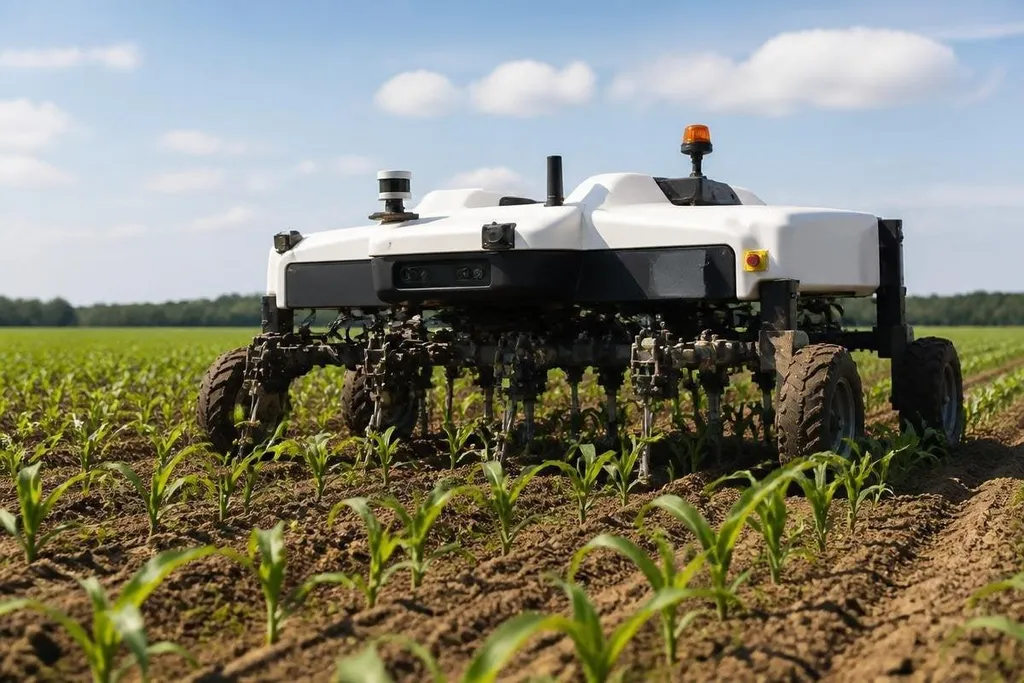
A weeding robot moves through crop rows, finds plants with cameras, then removes selected weeds with a blade, tool, or targeted spray. For a farm manager, the main question is practical: can the machine work across real fields without slowing planting, harvest, or human crews?
- Cameras separate crop leaves from nearby weeds.
- Row guidance keeps the robot between plants.
- Field checks decide where the machine fits and where it doesn't.
How the robot finds a weed
The robot starts with a map of its position. Some systems use satellite guidance, while others use cameras to follow crop rows. A few combine both methods so the machine can keep moving when plants hide the soil or the signal becomes weak.
The harder job comes next. The robot must tell a crop from a weed when both are green, close together, and partly covered by dust. Image software checks shape, color, spacing, and the plant's place in the row. The system then sends a command to the weeding tool.
That tool may cut the weed near the soil, disturb the soil around it, or place a small amount of spray on the target. The choice matters because a blade can damage a crop if the robot's position is off by a small amount, while spray brings rules about drift, weather, and crop safety.
What changes on the farm
A weeding robot can move repeated field work from a person walking behind a machine to a monitored machine following a planned route. That may help when labor is hard to find or when weeds need attention during a narrow window after planting.
The work also becomes easier to record. A robot can store its route, mark spots where it found weeds, and show areas that need another pass. Those records can help a manager compare fields and decide where people should inspect the crop.
A field map still leaves the service work out of view. Farm weeding robot reports can connect the robot’s sensor setup, weed target, test date, and human checks to the field result. That record gives a farm manager a way to judge whether fewer passes also mean more work at the service bench.
The change comes with a new task. Someone must charge the robot, check its tool, clear plant material, and review the field map. A machine that reduces walking can still add work at the service bench.
Where the machines struggle
Weeding works best when crop rows are clear and the plants have enough space for the tool to pass. Wet soil, heavy residue, uneven ground, poor lighting, and weeds growing inside the crop row can make detection and cutting harder.
Field shape matters too. A small or divided field may require more turning than a long, open block. Trees, fences, slopes, and weak network coverage can affect route planning.
A farm that needs a robot to cross several field types should test each one, not rely on a clean demonstration plot.
Crop safety is the first check. A machine that removes weeds well but damages young plants creates a larger problem than the one it was sent to fix. The farm also needs a plan for stops, blocked paths, weather changes, and a person who can reach the machine.
I’d wait for field records from the exact crop and soil before treating a weeding robot as a labor replacement.
A buying checklist for farm managers
Use these checks before signing a purchase order:
- Crop match: Ask which crops, row widths, plant sizes, and weed types the system has handled.
- Tool contact: Check how close the blade, cultivator, or spray nozzle works beside the crop.
- Field access: Map slopes, gates, headlands, tree cover, and areas with weak satellite or network signals.
- Daily work: Count charging, cleaning, tool changes, route setup, and operator checks.
- Failure plan: Confirm how the robot stops, sends an alert, and gets recovered after a fault.
Those answers show whether the machine fits the farm's workday. A crop trial should record missed weeds, damaged plants, time per field, repeat passes, and the labor needed to supervise the robot.
The next useful proof will come from those records, crop by crop. Until then, a weeding robot is best judged as a field tool with cameras and moving parts, not as a replacement for every person who walks a row.